Primatology, Ethics and Trauma
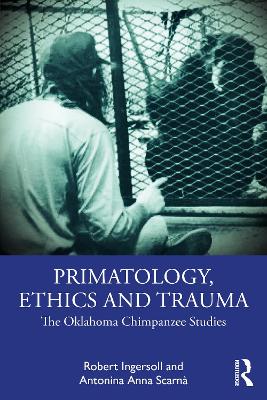 portes grátis
Primatology, Ethics and Trauma
The Oklahoma Chimpanzee Studies
Scarna, Antonina Anna; Ingersoll, Robert
Taylor & Francis Ltd
02/2023
190
Mole
Inglês
9781032413488
15 a 20 dias
350
Descrição não disponível.
1. Acknowledgment 2. Chimpanzee Family Trees 3. Introduction 4. Chapter 1: 50 Years Later 1.1 Fifty years since language experiments on chimpanzees 1.2 When we swap chimpanzee for child 1.3 A biography of Washoe 5. Chapter 2: Narratives for Flourishing 2.1 Why language and Noam Chomsky for Nim Chimpsky? 2.2 The introduction of language to a chimpanzee, order of the signs, and human parallels 2.3 Age of acquisition, order of acquisition 2.4 Trauma and language 6. Chapter 3: One of Us 3.1 Humans' need for a healthy upbringing and the needs of a chimpanzee 3.2 Washoe in her enclosure, existing not living, and self efficacy in humans 3.3 Survivors: The effects of trauma on the brain in humans: the Romanian orphanages and the Holocaust 3.4 "Man is the master of animals": the morality behind the authoritarian model over chimpanzees 7. Chapter 4: The Truth About Washoe 4.1 Washoe's preparation for mothering. What do good mothers do? 4.2 The true story of the death of Sequoyah 4.3 Was Washoe abnormal? Definition of abnormality in humans and in chimpanzees, with use of the DSM-5 4.4 Parental narcissism in humans and in chimpanzees: a sense of self worth, parental neglect, and chimpanzee trust 8. Chapter 5: Post Traumatic Chimpanzees 5.1 Did Washoe have complex PTSD? Living conditions and the turning of James Mahoney 5.2 Finding and building sanctuary 9. Chapter 6: When All The Chimps Have Gone 6.1 How do we look to the future? 6.2 How not to repeat history. Existing models of good practice 6.3 How to honour the memory of Washoe and the other Oklahoma chimpanzees 6.4 The last word
Este título pertence ao(s) assunto(s) indicados(s). Para ver outros títulos clique no assunto desejado.
animal welfare research;captive primate behaviour;trauma neuroscience;ethical research practices;language acquisition studies;developmental psychopathology;trauma effects in language experiments
1. Acknowledgment 2. Chimpanzee Family Trees 3. Introduction 4. Chapter 1: 50 Years Later 1.1 Fifty years since language experiments on chimpanzees 1.2 When we swap chimpanzee for child 1.3 A biography of Washoe 5. Chapter 2: Narratives for Flourishing 2.1 Why language and Noam Chomsky for Nim Chimpsky? 2.2 The introduction of language to a chimpanzee, order of the signs, and human parallels 2.3 Age of acquisition, order of acquisition 2.4 Trauma and language 6. Chapter 3: One of Us 3.1 Humans' need for a healthy upbringing and the needs of a chimpanzee 3.2 Washoe in her enclosure, existing not living, and self efficacy in humans 3.3 Survivors: The effects of trauma on the brain in humans: the Romanian orphanages and the Holocaust 3.4 "Man is the master of animals": the morality behind the authoritarian model over chimpanzees 7. Chapter 4: The Truth About Washoe 4.1 Washoe's preparation for mothering. What do good mothers do? 4.2 The true story of the death of Sequoyah 4.3 Was Washoe abnormal? Definition of abnormality in humans and in chimpanzees, with use of the DSM-5 4.4 Parental narcissism in humans and in chimpanzees: a sense of self worth, parental neglect, and chimpanzee trust 8. Chapter 5: Post Traumatic Chimpanzees 5.1 Did Washoe have complex PTSD? Living conditions and the turning of James Mahoney 5.2 Finding and building sanctuary 9. Chapter 6: When All The Chimps Have Gone 6.1 How do we look to the future? 6.2 How not to repeat history. Existing models of good practice 6.3 How to honour the memory of Washoe and the other Oklahoma chimpanzees 6.4 The last word
Este título pertence ao(s) assunto(s) indicados(s). Para ver outros títulos clique no assunto desejado.