
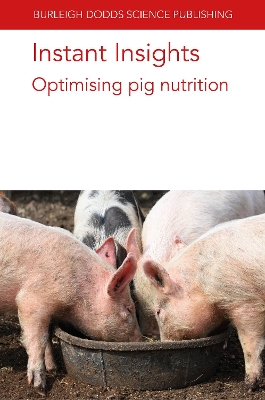
Instant Insights: Optimising Pig Nutrition
 portes grátis
Instant Insights: Optimising Pig Nutrition
Hewitt, Robert J. E.; Everaert, Nadia; Metzler-Zebeli, Dr Barbara U.; Millet, Dr Sam; Lopez-Alonso, Dr Marta; van Barneveld, Professor Robert; Lauridsen, Charlotte; Matte, Dr J. Jacques; D'Souza, Darryl N.; Garcia-Vaquero, Dr Marco
Burleigh Dodds Science Publishing Limited
04/2023
158
Mole
Inglês
9781786769527
15 a 20 dias
Descrição não disponível.
Chapter 1 - Advances in understanding pig nutritional requirements and metabolism: R. J. van Barneveld, R. J. E. Hewitt and D. N. D'Souza, SunPork Group, Australia;
1 Introduction
2 Maintaining sow body condition through gestation and lactation
3 Reducing variation in pig production systems
4 Strategic use of metabolic modifiers
5 Matching nutrient requirements to diet specifications
6 Optimising utilisation of co-products
7 Optimising gut health and nutrient utilisation capacity
8 Understanding nutrition and health interactions
9 Future trends and conclusion
10 Where to look for further information
11 References
Chapter taken from: Wiseman, J. (ed.), Achieving sustainable production of pig meat - Volume 2: Animal breeding and nutrition, Burleigh Dodds Science Publishing, Cambridge, UK, 2017, (ISBN 978 1 78676 092 0)
Chapter 2 - Managing feed to optimise pig health: Sam Millet, Institute for Agricultural and Fisheries Research (IVLO), Belgium;
1 Introduction
2 Health energy and protein intake
3 Mineral and vitamin nutrition for residivent animals
4 Fiber, an overlooked nutrient?
5 Ingredient composition
6 Case study: the importance of feed structure for health and performance
7 Conclusion
8 Future trends
9 References
Chapter taken from: Maes, D. and Segales, J. (eds.), Optimising pig herd health and production, Burleigh Dodds Science Publishing, Cambridge, UK, 2022, (ISBN 978 1 78676 883 4)
Chapter 3 - The use of prebiotics to optimize gut function in pigs: Barbara U. Metzler-Zebeli, University of Veterinary Medicine Vienna, Austria;
1 Introduction
2 Maintenance of gut health and functionality
3 The porcine gut microbiome
4 Definition of prebiotics
5 Prebiotic di-oligosaccharides in pig nutrition
6 Modes of action of prebiotics
7 Optimization of gut function by fructans and galacto-oligosaccharides (GOS)
8 Prebiotic effects on gut functions in the early postnatal phase
9 Gut effects of porcine milk oligosaccharides
10 Future trends in research
11 Where to look for further information
12 References
Chapter taken from: Bailey, M. and Stokes, C. (eds.), Understanding gut microbiomes as targets for improving gut health, Burleigh Dodds Science Publishing, Cambridge, UK, 2022, (ISBN 978 1 78676 487 4)
Chapter 4 - Recent advances in understanding the role of vitamins in pig nutrition: Charlotte Lauridsen, Aarhus University, Denmark; and J. Jacques Matte, Agriculture and Agri-Food Canada, Canada;
1 Introduction
2 Supply of vitamins to pigs
3 Growth performance, antioxidative pressure and immunological competence
4 Vitamins and antioxidation capacity: new perspectives
5 Conclusion and future trends
6 Where to look for further information
7 References
Chapter taken from: Wiseman, J. (ed.), Achieving sustainable production of pig meat - Volume 2: Animal breeding and nutrition, Burleigh Dodds Science Publishing, Cambridge, UK, 2017, (ISBN 978 1 78676 092 0)
Chapter 5 - Developing seaweed/macroalgae as feed for pigs: Marta Lopez-Alonso, Universidade de Santiago de Compostela, Spain; Marco Garcia-Vaquero, University College Dublin, Ireland; and Marta Miranda, Universidade de Santiago de Compostela, Spain;
1 Introduction
2 Challenges in using macroalgae for feed applications
3 Composition of macroalgae
4 Biological functions and health-promoting effects of macroalgae and macroalgal-derived extracts in pig nutrition
5 Conclusion and future trends
6 Where to look for further information
7 Acknowledgements
8 References
Chapter taken from: Lei, X. G. (ed.), Seaweed and microalgae as alternative sources of protein, Burleigh Dodds Science Publishing, Cambridge, UK, 2021, (ISBN 978 1 78676 620 5)
1 Introduction
2 Maintaining sow body condition through gestation and lactation
3 Reducing variation in pig production systems
4 Strategic use of metabolic modifiers
5 Matching nutrient requirements to diet specifications
6 Optimising utilisation of co-products
7 Optimising gut health and nutrient utilisation capacity
8 Understanding nutrition and health interactions
9 Future trends and conclusion
10 Where to look for further information
11 References
Chapter taken from: Wiseman, J. (ed.), Achieving sustainable production of pig meat - Volume 2: Animal breeding and nutrition, Burleigh Dodds Science Publishing, Cambridge, UK, 2017, (ISBN 978 1 78676 092 0)
Chapter 2 - Managing feed to optimise pig health: Sam Millet, Institute for Agricultural and Fisheries Research (IVLO), Belgium;
1 Introduction
2 Health energy and protein intake
3 Mineral and vitamin nutrition for residivent animals
4 Fiber, an overlooked nutrient?
5 Ingredient composition
6 Case study: the importance of feed structure for health and performance
7 Conclusion
8 Future trends
9 References
Chapter taken from: Maes, D. and Segales, J. (eds.), Optimising pig herd health and production, Burleigh Dodds Science Publishing, Cambridge, UK, 2022, (ISBN 978 1 78676 883 4)
Chapter 3 - The use of prebiotics to optimize gut function in pigs: Barbara U. Metzler-Zebeli, University of Veterinary Medicine Vienna, Austria;
1 Introduction
2 Maintenance of gut health and functionality
3 The porcine gut microbiome
4 Definition of prebiotics
5 Prebiotic di-oligosaccharides in pig nutrition
6 Modes of action of prebiotics
7 Optimization of gut function by fructans and galacto-oligosaccharides (GOS)
8 Prebiotic effects on gut functions in the early postnatal phase
9 Gut effects of porcine milk oligosaccharides
10 Future trends in research
11 Where to look for further information
12 References
Chapter taken from: Bailey, M. and Stokes, C. (eds.), Understanding gut microbiomes as targets for improving gut health, Burleigh Dodds Science Publishing, Cambridge, UK, 2022, (ISBN 978 1 78676 487 4)
Chapter 4 - Recent advances in understanding the role of vitamins in pig nutrition: Charlotte Lauridsen, Aarhus University, Denmark; and J. Jacques Matte, Agriculture and Agri-Food Canada, Canada;
1 Introduction
2 Supply of vitamins to pigs
3 Growth performance, antioxidative pressure and immunological competence
4 Vitamins and antioxidation capacity: new perspectives
5 Conclusion and future trends
6 Where to look for further information
7 References
Chapter taken from: Wiseman, J. (ed.), Achieving sustainable production of pig meat - Volume 2: Animal breeding and nutrition, Burleigh Dodds Science Publishing, Cambridge, UK, 2017, (ISBN 978 1 78676 092 0)
Chapter 5 - Developing seaweed/macroalgae as feed for pigs: Marta Lopez-Alonso, Universidade de Santiago de Compostela, Spain; Marco Garcia-Vaquero, University College Dublin, Ireland; and Marta Miranda, Universidade de Santiago de Compostela, Spain;
1 Introduction
2 Challenges in using macroalgae for feed applications
3 Composition of macroalgae
4 Biological functions and health-promoting effects of macroalgae and macroalgal-derived extracts in pig nutrition
5 Conclusion and future trends
6 Where to look for further information
7 Acknowledgements
8 References
Chapter taken from: Lei, X. G. (ed.), Seaweed and microalgae as alternative sources of protein, Burleigh Dodds Science Publishing, Cambridge, UK, 2021, (ISBN 978 1 78676 620 5)
Este título pertence ao(s) assunto(s) indicados(s). Para ver outros títulos clique no assunto desejado.
Metabolic modifiers;Pig gestation;Pig lactation;Pig metabolism;Pork production systems;piglet;nutrient;ingredient composition;intestinal health;fermentation;fructooligosaccharides;galactooligosaccharides;gut microbiota development;short-chain fatty acid signaling;milk oligosaccharides;weaning;gut physiology;Oxidative mechanisms;Pig health;Pig immunology;Pig production;Vitamin supply;Vitamins;feed;swine;seaweed;protein source;laminarin;fucoidan;brown macroalgae
Chapter 1 - Advances in understanding pig nutritional requirements and metabolism: R. J. van Barneveld, R. J. E. Hewitt and D. N. D'Souza, SunPork Group, Australia;
1 Introduction
2 Maintaining sow body condition through gestation and lactation
3 Reducing variation in pig production systems
4 Strategic use of metabolic modifiers
5 Matching nutrient requirements to diet specifications
6 Optimising utilisation of co-products
7 Optimising gut health and nutrient utilisation capacity
8 Understanding nutrition and health interactions
9 Future trends and conclusion
10 Where to look for further information
11 References
Chapter taken from: Wiseman, J. (ed.), Achieving sustainable production of pig meat - Volume 2: Animal breeding and nutrition, Burleigh Dodds Science Publishing, Cambridge, UK, 2017, (ISBN 978 1 78676 092 0)
Chapter 2 - Managing feed to optimise pig health: Sam Millet, Institute for Agricultural and Fisheries Research (IVLO), Belgium;
1 Introduction
2 Health energy and protein intake
3 Mineral and vitamin nutrition for residivent animals
4 Fiber, an overlooked nutrient?
5 Ingredient composition
6 Case study: the importance of feed structure for health and performance
7 Conclusion
8 Future trends
9 References
Chapter taken from: Maes, D. and Segales, J. (eds.), Optimising pig herd health and production, Burleigh Dodds Science Publishing, Cambridge, UK, 2022, (ISBN 978 1 78676 883 4)
Chapter 3 - The use of prebiotics to optimize gut function in pigs: Barbara U. Metzler-Zebeli, University of Veterinary Medicine Vienna, Austria;
1 Introduction
2 Maintenance of gut health and functionality
3 The porcine gut microbiome
4 Definition of prebiotics
5 Prebiotic di-oligosaccharides in pig nutrition
6 Modes of action of prebiotics
7 Optimization of gut function by fructans and galacto-oligosaccharides (GOS)
8 Prebiotic effects on gut functions in the early postnatal phase
9 Gut effects of porcine milk oligosaccharides
10 Future trends in research
11 Where to look for further information
12 References
Chapter taken from: Bailey, M. and Stokes, C. (eds.), Understanding gut microbiomes as targets for improving gut health, Burleigh Dodds Science Publishing, Cambridge, UK, 2022, (ISBN 978 1 78676 487 4)
Chapter 4 - Recent advances in understanding the role of vitamins in pig nutrition: Charlotte Lauridsen, Aarhus University, Denmark; and J. Jacques Matte, Agriculture and Agri-Food Canada, Canada;
1 Introduction
2 Supply of vitamins to pigs
3 Growth performance, antioxidative pressure and immunological competence
4 Vitamins and antioxidation capacity: new perspectives
5 Conclusion and future trends
6 Where to look for further information
7 References
Chapter taken from: Wiseman, J. (ed.), Achieving sustainable production of pig meat - Volume 2: Animal breeding and nutrition, Burleigh Dodds Science Publishing, Cambridge, UK, 2017, (ISBN 978 1 78676 092 0)
Chapter 5 - Developing seaweed/macroalgae as feed for pigs: Marta Lopez-Alonso, Universidade de Santiago de Compostela, Spain; Marco Garcia-Vaquero, University College Dublin, Ireland; and Marta Miranda, Universidade de Santiago de Compostela, Spain;
1 Introduction
2 Challenges in using macroalgae for feed applications
3 Composition of macroalgae
4 Biological functions and health-promoting effects of macroalgae and macroalgal-derived extracts in pig nutrition
5 Conclusion and future trends
6 Where to look for further information
7 Acknowledgements
8 References
Chapter taken from: Lei, X. G. (ed.), Seaweed and microalgae as alternative sources of protein, Burleigh Dodds Science Publishing, Cambridge, UK, 2021, (ISBN 978 1 78676 620 5)
1 Introduction
2 Maintaining sow body condition through gestation and lactation
3 Reducing variation in pig production systems
4 Strategic use of metabolic modifiers
5 Matching nutrient requirements to diet specifications
6 Optimising utilisation of co-products
7 Optimising gut health and nutrient utilisation capacity
8 Understanding nutrition and health interactions
9 Future trends and conclusion
10 Where to look for further information
11 References
Chapter taken from: Wiseman, J. (ed.), Achieving sustainable production of pig meat - Volume 2: Animal breeding and nutrition, Burleigh Dodds Science Publishing, Cambridge, UK, 2017, (ISBN 978 1 78676 092 0)
Chapter 2 - Managing feed to optimise pig health: Sam Millet, Institute for Agricultural and Fisheries Research (IVLO), Belgium;
1 Introduction
2 Health energy and protein intake
3 Mineral and vitamin nutrition for residivent animals
4 Fiber, an overlooked nutrient?
5 Ingredient composition
6 Case study: the importance of feed structure for health and performance
7 Conclusion
8 Future trends
9 References
Chapter taken from: Maes, D. and Segales, J. (eds.), Optimising pig herd health and production, Burleigh Dodds Science Publishing, Cambridge, UK, 2022, (ISBN 978 1 78676 883 4)
Chapter 3 - The use of prebiotics to optimize gut function in pigs: Barbara U. Metzler-Zebeli, University of Veterinary Medicine Vienna, Austria;
1 Introduction
2 Maintenance of gut health and functionality
3 The porcine gut microbiome
4 Definition of prebiotics
5 Prebiotic di-oligosaccharides in pig nutrition
6 Modes of action of prebiotics
7 Optimization of gut function by fructans and galacto-oligosaccharides (GOS)
8 Prebiotic effects on gut functions in the early postnatal phase
9 Gut effects of porcine milk oligosaccharides
10 Future trends in research
11 Where to look for further information
12 References
Chapter taken from: Bailey, M. and Stokes, C. (eds.), Understanding gut microbiomes as targets for improving gut health, Burleigh Dodds Science Publishing, Cambridge, UK, 2022, (ISBN 978 1 78676 487 4)
Chapter 4 - Recent advances in understanding the role of vitamins in pig nutrition: Charlotte Lauridsen, Aarhus University, Denmark; and J. Jacques Matte, Agriculture and Agri-Food Canada, Canada;
1 Introduction
2 Supply of vitamins to pigs
3 Growth performance, antioxidative pressure and immunological competence
4 Vitamins and antioxidation capacity: new perspectives
5 Conclusion and future trends
6 Where to look for further information
7 References
Chapter taken from: Wiseman, J. (ed.), Achieving sustainable production of pig meat - Volume 2: Animal breeding and nutrition, Burleigh Dodds Science Publishing, Cambridge, UK, 2017, (ISBN 978 1 78676 092 0)
Chapter 5 - Developing seaweed/macroalgae as feed for pigs: Marta Lopez-Alonso, Universidade de Santiago de Compostela, Spain; Marco Garcia-Vaquero, University College Dublin, Ireland; and Marta Miranda, Universidade de Santiago de Compostela, Spain;
1 Introduction
2 Challenges in using macroalgae for feed applications
3 Composition of macroalgae
4 Biological functions and health-promoting effects of macroalgae and macroalgal-derived extracts in pig nutrition
5 Conclusion and future trends
6 Where to look for further information
7 Acknowledgements
8 References
Chapter taken from: Lei, X. G. (ed.), Seaweed and microalgae as alternative sources of protein, Burleigh Dodds Science Publishing, Cambridge, UK, 2021, (ISBN 978 1 78676 620 5)
Este título pertence ao(s) assunto(s) indicados(s). Para ver outros títulos clique no assunto desejado.
Metabolic modifiers;Pig gestation;Pig lactation;Pig metabolism;Pork production systems;piglet;nutrient;ingredient composition;intestinal health;fermentation;fructooligosaccharides;galactooligosaccharides;gut microbiota development;short-chain fatty acid signaling;milk oligosaccharides;weaning;gut physiology;Oxidative mechanisms;Pig health;Pig immunology;Pig production;Vitamin supply;Vitamins;feed;swine;seaweed;protein source;laminarin;fucoidan;brown macroalgae


